



Key Takeaways
- Customers usually notice product truth more than production method. They care about whether the image feels accurate and trustworthy.
- AI product photography is strongest when the goal is variation, context, or scalable content from real product inputs.
- Professional photoshoots still hold an advantage when exact texture, labels, hardware, or color accuracy are high-stakes.
- The safest workflow is often not AI versus photoshoot. It is deciding which image jobs still need real capture and which jobs AI can expand afterward.
- Publishable ecommerce visuals should still be reviewed for product shape, color, labels, and shopper trust before going live.
Customers do not judge product images the way creative teams do. They are not scoring prompt quality, production efficiency, or visual novelty. They are looking for a faster answer to a simpler question: "Does this image help me trust what I am buying?"
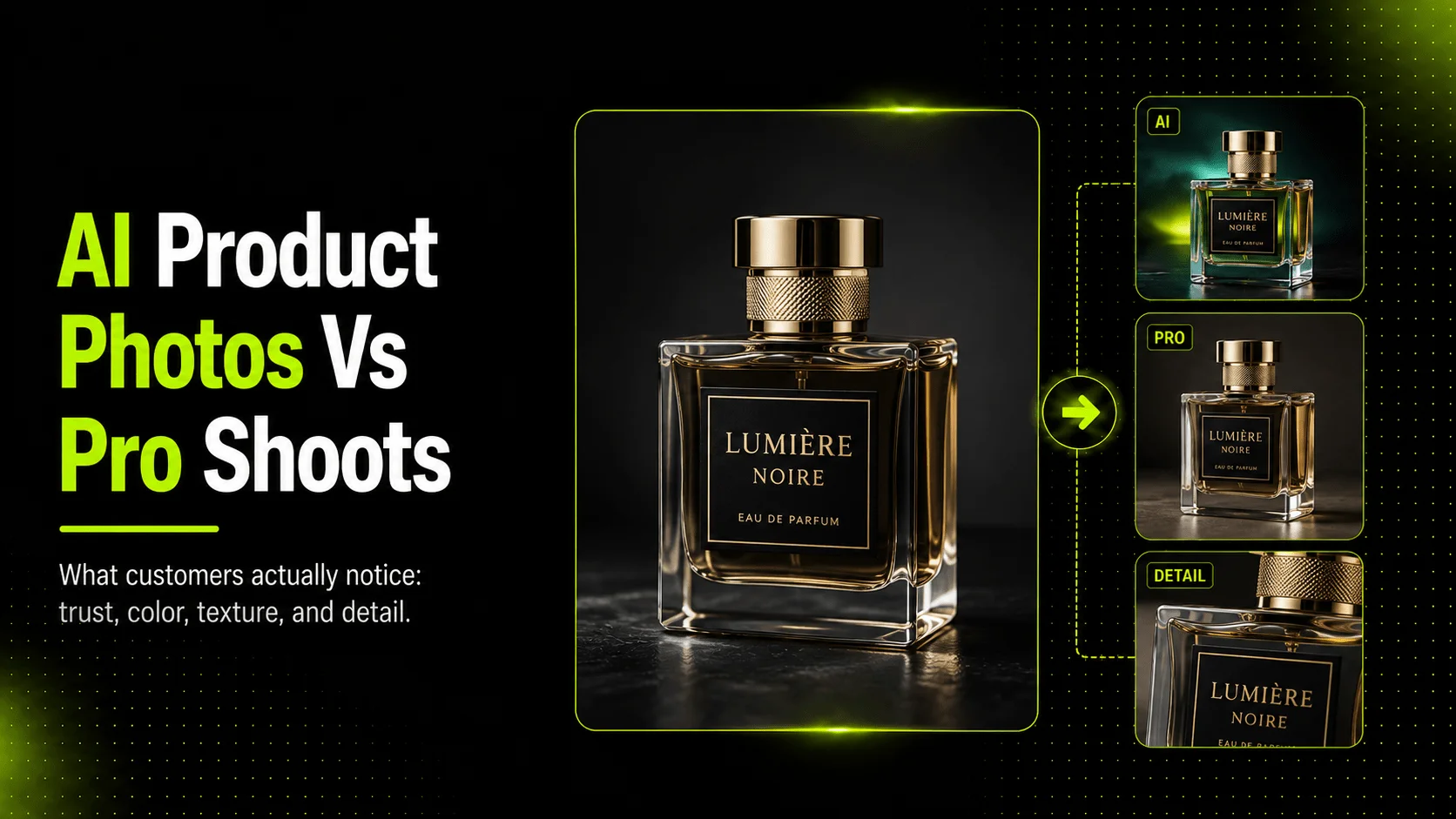
That is why the real comparison between AI product photography and professional photoshoots is not about which one looks more impressive in isolation. The harder question is which one preserves the visual signals customers actually use to judge a product. In some contexts, AI product photography is already strong enough to do the job well. In other contexts, especially where exact color, material, labels, or included details matter, professional photoshoots still hold an advantage.
What customers actually inspect in product images
Customers rarely describe their judgment in technical terms, but they inspect a product image in practical ways.
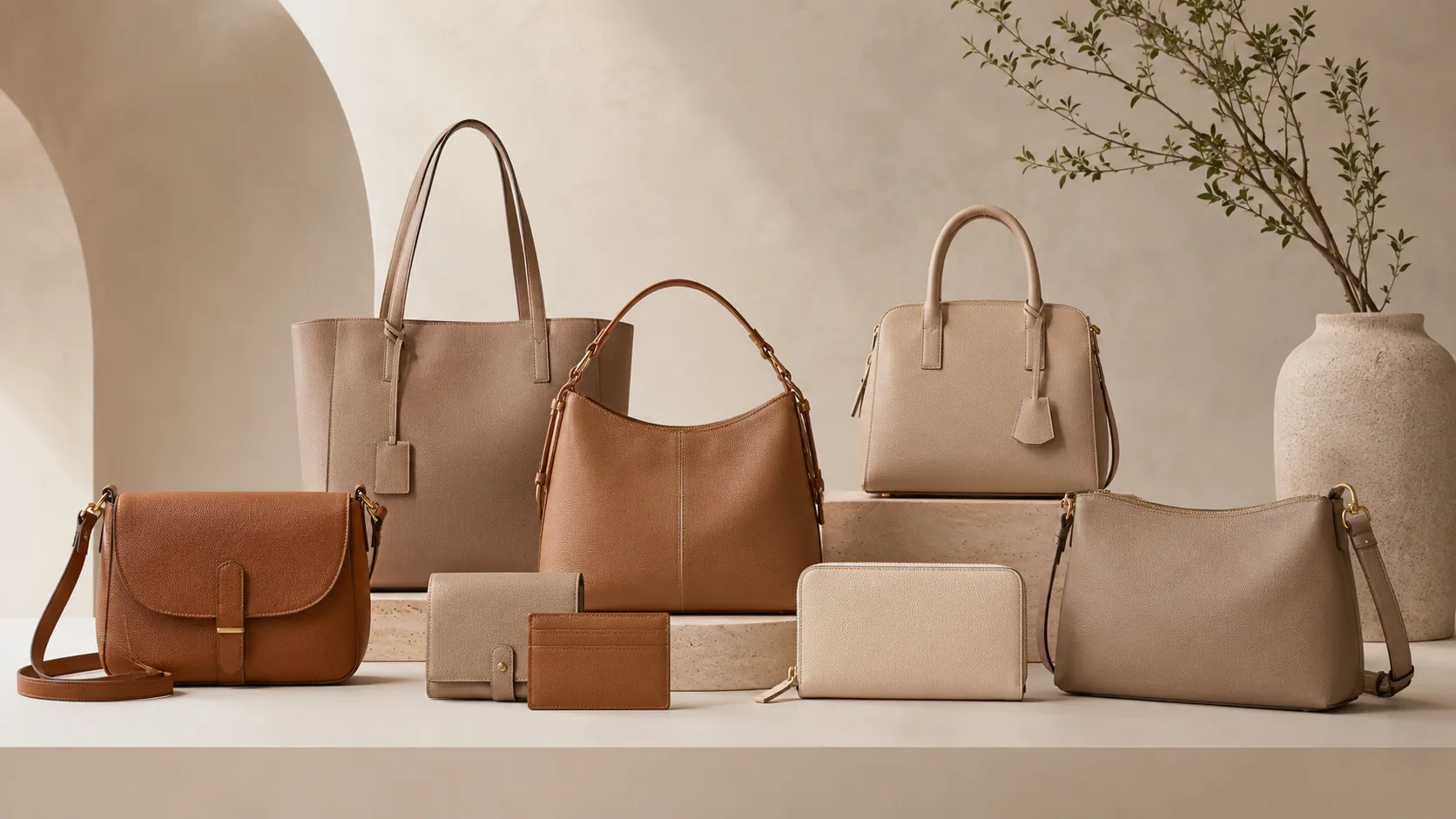
If the image is a skincare bottle, they look at label clarity, cap shape, and whether the package feels real and readable. If it is a handbag, they look at silhouette, hardware, stitching, and material finish. If it is a sneaker, they look at color blocking, sole pattern, and shape. If it is a t-shirt, they care about fabric texture, fit context, and whether the item looks like a real garment rather than a stylized mockup.
This is why some AI-generated product images fail even when they are visually attractive. They may feel polished, but they weaken the exact cues the shopper uses to decide whether the image is believable.
The comparison should start there. Not with the question "Can AI make beautiful images?" but with the question "What does the customer actually use to judge trust?"
Where AI product photography holds up well
AI product photography is strongest when the image job is not absolute inspection, but usable expansion.
It can work well when a brand already has a strong source product image and wants to create more variations without rebuilding the shoot from scratch. A skincare seller may want a cleaner white-background variation, a softer PDP image, and a couple of campaign-friendly options based on the same approved product. A handbag brand may want to expand one studio image into multiple settings while keeping the main product recognizable. A sneaker team may need repeated crops, background variations, and ad-ready versions for different channels.
That is where AI becomes commercially useful. Not because it always looks more real, but because it can create more usable assets from fewer approved inputs.
The more useful context here is not general AI adoption. It is what the image still needs to preserve for the customer. Shopify and Adobe both frame product imagery around clarity, detail visibility, and the ability to help a shopper understand what is being sold. That is why AI can already be commercially useful without automatically replacing photoshoots. The image does not need to be traditionally captured to be useful, but it does need to preserve the exact cues customers rely on to trust the product.
Where professional photoshoots still show an advantage
Professional photoshoots still hold a stronger position when customer trust depends on exact detail preservation.
Texture and material
A professional shoot is still more reliable when a shopper needs to judge fine material cues. A handbag's leather grain, a sneaker's panel texture, or a t-shirt's knit surface can all be subtly distorted by AI, even when the output looks convincing at first glance.
Labels and printed details
Skincare packaging, coffee bags, or any product with visible printed information becomes riskier in AI-first imagery. The image may appear clean while the label wording, spacing, or readability drifts just enough to weaken trust.
Exact color confidence
Color is one of the biggest customer-facing risks. A shoot based on the real product remains safer when color matching is critical, such as cosmetics packaging, footwear variants, or apparel where the buyer is comparing shades.
Trust-critical hero images
Customers usually give the first image more weight than supporting images. If the hero image is the main trust anchor on the product page or listing, professional photography often remains the safer baseline because it starts with a direct capture of the real object rather than a generated interpretation.
AI product photography vs professional photoshoots
| What customers notice | AI product photography | Professional photoshoots |
|---|---|---|
| Shape and basic composition | Often strong when based on real reference images | Strongest for exact physical capture |
| Color confidence | Can be strong, but needs review | Safer when exact color matters |
| Texture and material fidelity | Can look convincing, but may drift on close inspection | Stronger for trust-critical detail |
| Labels and packaging text | Risky when readable text matters | Safer for exact readability |
| Variation at scale | Strong advantage | Expensive and slower to expand |
| Hero image trust | Useful in some cases, but should be reviewed carefully | Still safer as the primary trust anchor |
| Supporting context images | Strong fit | Strong but slower and costlier to scale |
This is the practical takeaway: customers do not automatically reject AI images. They respond to whether the image helps them trust the product. AI can perform well when it extends or cleans strong product imagery. Professional photoshoots still outperform when exact visual truth is the main job.
When AI is a fit and when a photoshoot is still safer
AI is a stronger fit when
- you already have approved product images and need more variations
- the image job is background expansion, supporting context, or channel adaptation
- the product does not depend on tiny printed details to build trust
- the team needs scale more than one-off hero precision
A professional photoshoot is still safer when
- the first image must establish maximum trust
- exact color matching matters
- material texture or hardware detail drives the buying decision
- the product has important visible labels, packaging text, or accuracy-sensitive details
- the output will be used in a trust-critical listing or marketplace context
The strongest decision is often not "AI or photoshoot." It is deciding which image roles still need real capture and which roles AI can expand after the fact.
If you already have product images and need more usable variations without repeating the whole shoot, AI Product Photography can help expand the asset set while keeping the final review step intact. Supporting tools such as Background Remover and Image Upscaler are most useful when they help clean, prepare, and extend approved product images instead of replacing the trust decision.
What to review before publishing AI-generated product visuals
This is a high-risk topic because the article is directly about what customers trust when they see the image.
Before publishing, review the image for:
- Product shape: does the silhouette still match the real item?
- Color accuracy: would the buyer receive something that looks different from what the image implies?
- Logo placement: are brand marks and placement details still correct?
- Label text: is visible text readable and accurate enough where it matters?
- Material or texture: does the image still reflect the product realistically?
- Included accessories: does the image imply something is included when it is not?
- Shopper trust: if the customer saw only this image, would it set the right expectation for the real product?
Google Merchant Center's image guidance reinforces the same principle from a platform perspective: images should accurately display the product and avoid misleading overlays or visual distractions. That does not answer the full trust question, but it does support the idea that publishable product imagery needs more than beauty. It needs product truth.
FAQ
Conclusion
Customers do not judge product images by asking whether the workflow was AI or traditional. They judge whether the image helps them trust what they are buying. That is the standard that matters.
AI product photography can already do useful work when it extends strong product inputs into more scalable variations. Professional photoshoots still hold the advantage when exact color, texture, labels, or trust-critical hero imagery matter most. The strongest workflow usually combines both: real capture where product truth is fragile, and AI expansion where scale and flexibility matter more.