



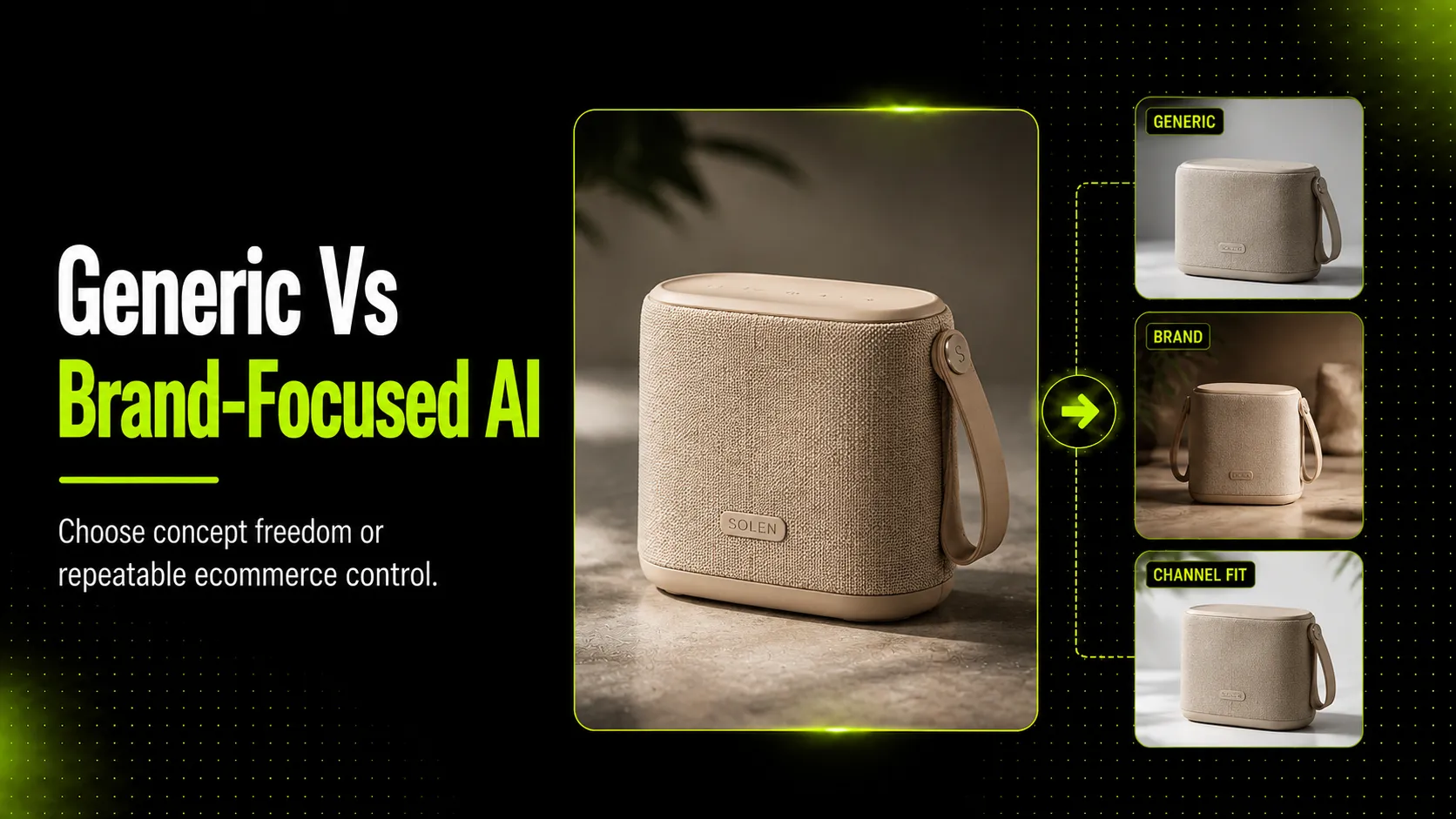
What Generic and Brand-Focused AI Image Generators Actually Mean
The easiest way to get this comparison wrong is to treat it like a battle between "creative" tools and "business" tools. That is too simple.
Generic AI image generators are broad image models that accept prompts, reference images, or both, then produce new visuals across many styles and subjects. OpenAI's image generation materials position GPT Image as a general system for generating and editing images from text and image inputs. Midjourney's Personalization and Moodboards show that generic tools can also learn aesthetic preferences and guide style direction.
That is useful, but it is still not the same thing as a brand workflow.
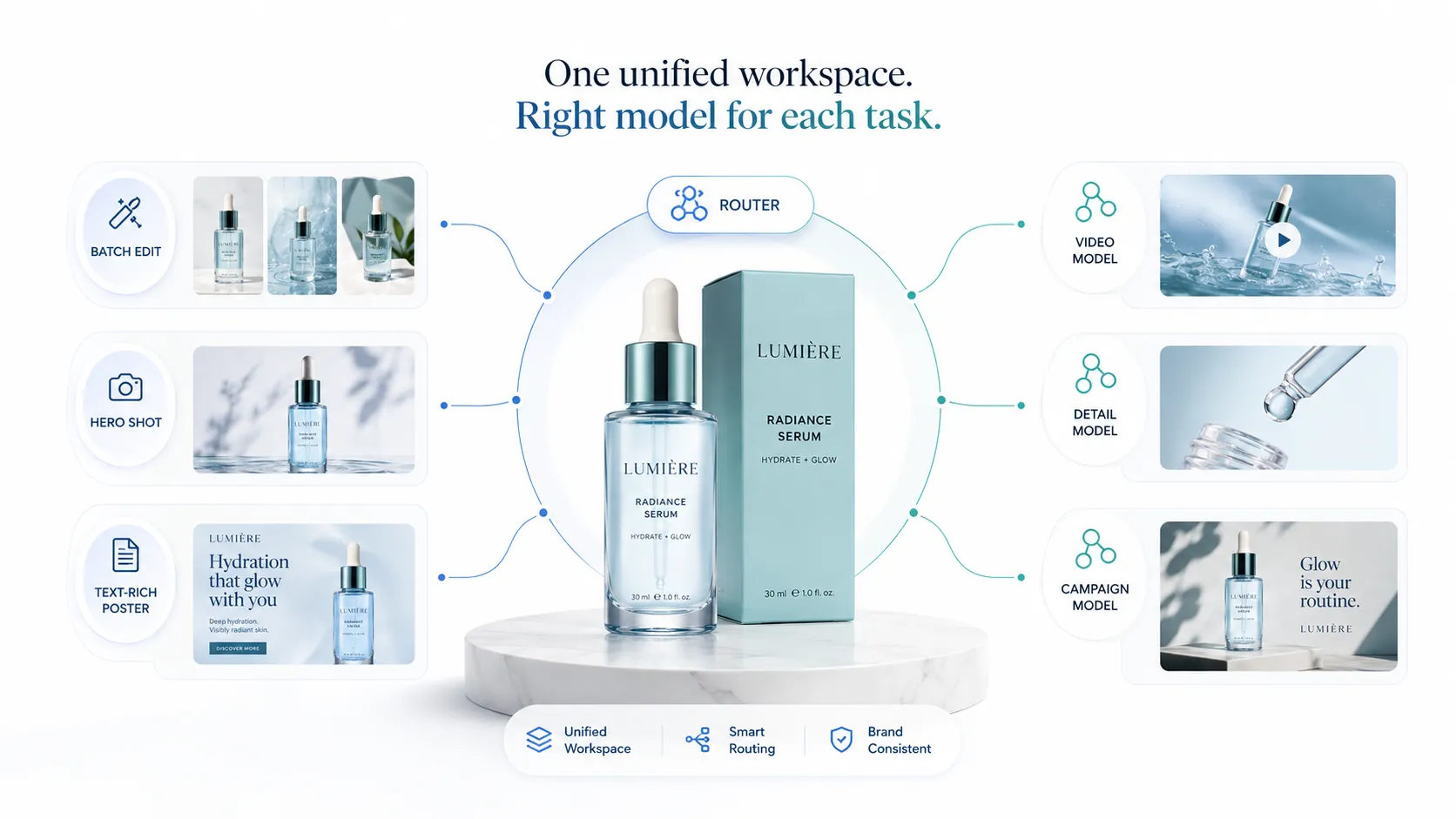
Brand-focused AI image generators are not always one special model trained only for one company. In practice, they are usually systems designed to keep outputs closer to a repeatable commercial standard. That can include approved product references, reusable style logic, batch editing, aspect-ratio control, product-aware variation, or explicit brand alignment features such as Adobe Firefly Custom Models.
So the practical distinction is this:
- generic tools are strongest when the team needs possibility
- brand-focused tools are strongest when the team needs repeatability
If the job is to explore ten possible directions for a sneaker campaign, a generic model may be enough. If the job is to create a coherent asset set for ten sneaker SKUs with stable visual logic, repeatability matters more than open-ended possibility.
What Generic AI Image Generators Do Well
Generic models are useful because they lower the cost of exploring ideas before the workflow hardens.
They are especially strong in four situations.
1. Early concept exploration
If the team is still deciding whether a handbag launch should feel minimal, editorial, or more streetwear-driven, a generic model can generate directions quickly. That is faster than briefing a full production path before the brand even knows what visual territory it wants.
2. Campaign ideation
For a sneaker brand planning a seasonal push, generic generators can help mock up mood, setting, and energy. They are good at helping teams react to a concept before they commit to building a full asset set.
3. One-off marketing visuals
If the output is a single blog image, a trend post cover, or a social idea that does not need to anchor a catalog, strict consistency matters less. In that case, the flexibility of a generic model can be an advantage.
4. Small teams still learning what they need
A very early-stage brand may not yet know whether its bottleneck is concepting, cleanup, product fidelity, or scaling. Generic tools can be a low-friction way to learn where the workflow breaks before investing in a more structured system.
This is why generic models remain valuable. They reduce creative startup cost. They let teams test ideas before they commit to a repeatable operating model.
The tradeoff is that they push more judgment downstream. If a team uses a generic model for final commerce-facing assets, it often saves time early and spends that time later in review, correction, and asset cleanup.
Where Generic Generators Usually Break for Brands
Generic tools do not fail because they are weak. They fail because commercial image systems demand something different from image novelty.
Repeatability becomes fragile
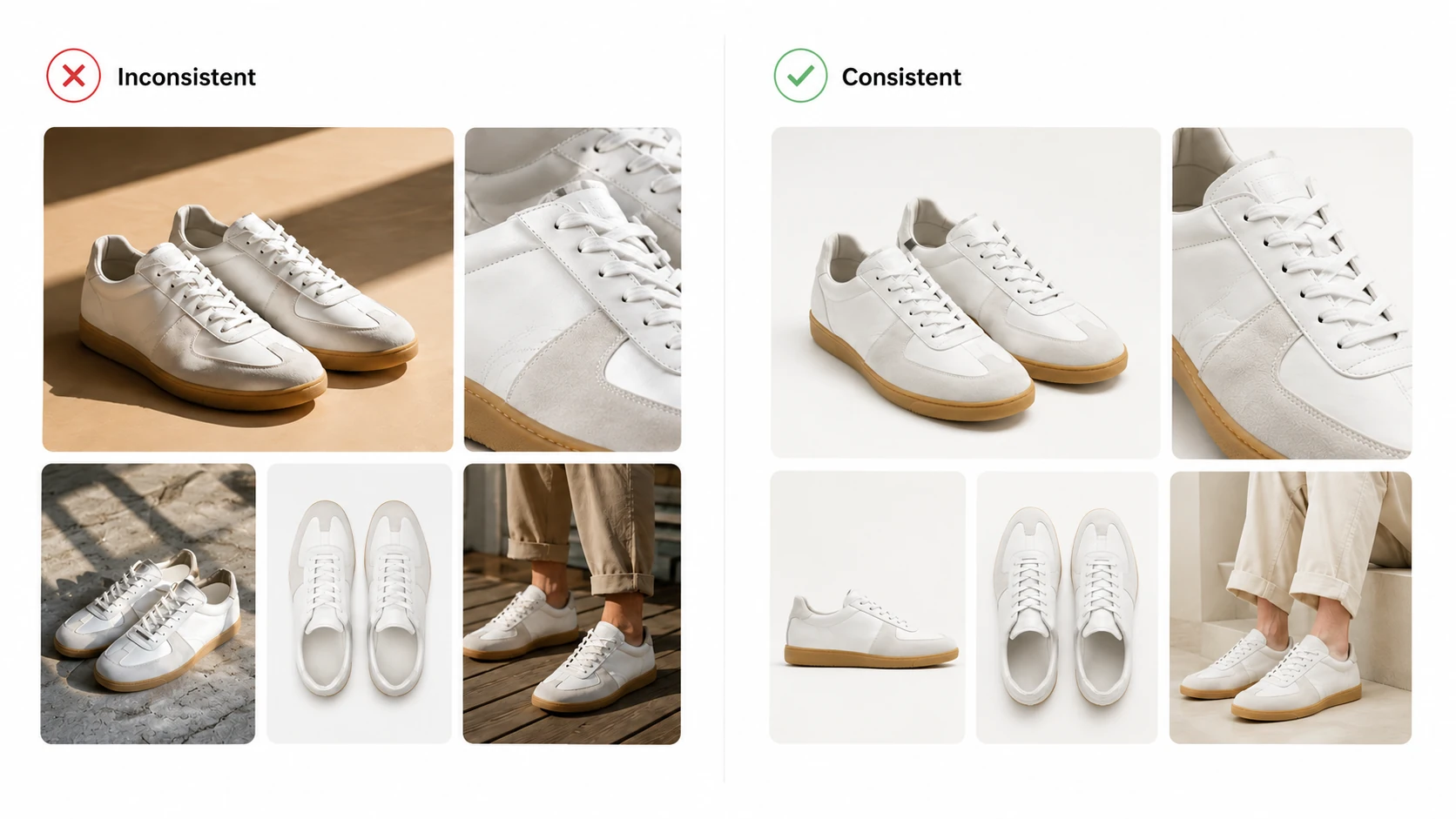
A skincare bottle may look elegant in one generation and slightly different in the next. The cap may shift, the label may soften, or the bottle proportions may drift. Each image can still look good on its own. The problem only becomes obvious when the assets sit next to each other.
Style steering is not the same as catalog control
Midjourney's personalization and moodboard features are useful because they help shape a repeatable aesthetic. Still, aesthetic similarity is only one layer of brand consistency. It does not automatically solve product truth, crop discipline, or channel-specific output needs.
For example, a dress may keep the same general editorial tone across generations while the garment fit, neckline, or sleeve shape changes enough that the set becomes harder to use for product-facing merchandising.
Review overhead rises faster than teams expect
The hidden cost of a generic workflow is not that the first output takes longer. The cost is that the team has to keep asking, "Is this still the real product?" A handbag image might preserve the overall silhouette but drift on hardware finish or handle structure. A sneaker might keep the color story but change panel lines in subtle ways. A packaging image might look premium while label spacing becomes less trustworthy.
Channel fit becomes a manual burden
A generic model can create a strong visual idea, but someone still has to make sure the image works for the actual destination. Google Merchant Center requires product images to accurately display the item. Shopify's product photography guide also reinforces the value of consistent lighting, backgrounds, and clear product presentation for commerce.
That means a nice-looking image is not enough. If the image does not match the product, the crop, or the use case, the review burden comes back to the team anyway.
What Brand-Focused AI Image Generators Add
Brand-focused systems matter because they reduce the number of judgment calls that have to be reinvented every time.
They usually add value in four practical ways.
1. They anchor generation to approved product references
This is a major workflow difference. Instead of starting from a blank prompt and hoping the model lands close enough, the workflow starts from real product inputs and expands outward from there.
That is why a product-focused tool such as AI Product Photography is often a stronger fit for ecommerce teams than a generic image generator alone. The workflow is built around commerce-facing product output, not just open-ended image creation.
2. They make variation easier without resetting the whole visual logic
If a brand already has one strong direction, it does not want to rebuild it from scratch for every new SKU, campaign, or crop. Brand-focused systems are better when the job is "make more like this, but safely."
That is where tools such as AI Image Replacer become useful. They support adaptation of a proven concept into new background, clothing, or campaign variations without making the team abandon the original structure.
3. They support multi-asset workflows better
A generic model often helps create one image. A brand-focused workflow needs to support a set: hero image, supporting variation, ad crop, collection image, and sometimes a lookbook-style extension. For fashion teams, a connected tool such as AI Fashion Lookbook Generator fits this logic better because the question is not "Can the model make a stylish image?" The question is "Can the workflow turn approved product inputs into more usable assets?"
4. They lower rework in high-volume environments
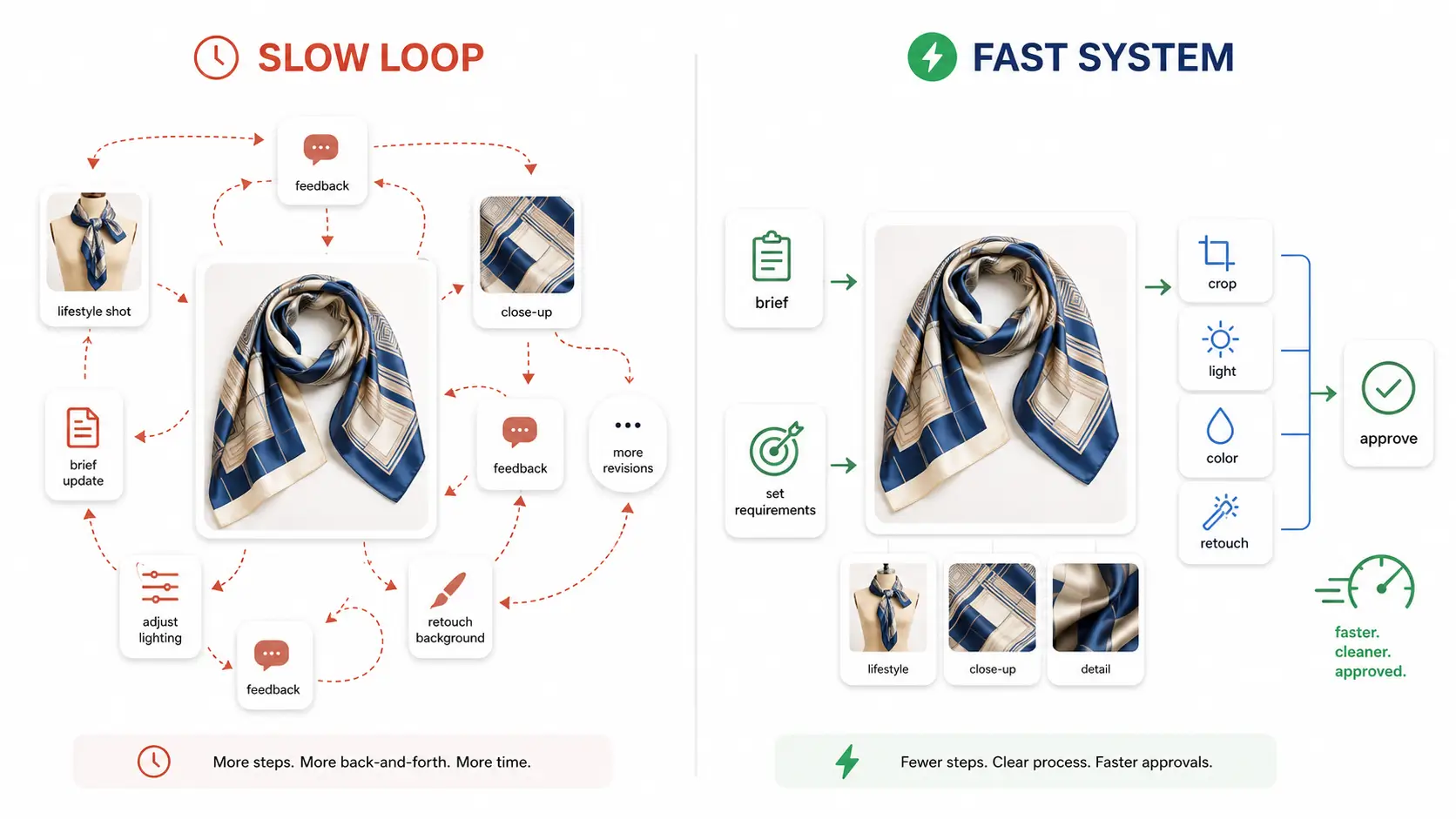
The real advantage is not abstract brand safety. It is operational stability. When teams manage many SKUs, launch cycles, or paid-media variations, the cost of repeated manual correction can wipe out the speed advantage of a purely generic workflow.
That is also why Adobe's custom-model direction matters. It shows that the market increasingly recognizes brand-specific alignment as a workflow layer worth building explicitly, not just an aesthetic preference left to prompts.
Generic vs Brand-Focused AI Image Generators: Comparison Table
| Decision Factor | Generic AI Image Generators | Brand-Focused AI Image Generators | Why It Matters |
|---|---|---|---|
| Best starting point | open-ended prompts, concept exploration, broad style testing | approved references, repeatable product or campaign systems | the starting point shapes how much cleanup comes later |
| Creative range | very wide | usually narrower but more controlled | wide possibility is useful early, but control matters later |
| Repeatability | possible, but fragile across batches | stronger when the workflow is designed around consistency | repeatability matters more than novelty in catalogs and asset sets |
| Product fidelity | depends heavily on review and source setup | usually stronger for product-centered workflows | customer-facing assets need believable product truth |
| Batch usefulness | limited unless supported by extra workflow layers | stronger for scaling across SKUs, variants, and channels | teams rarely publish one image in isolation |
| Channel readiness | often manual | more likely to fit commerce workflows directly | review cost rises when every export needs extra handling |
| Best fit | ideation, concepting, one-off visuals, early-stage teams | ecommerce production, repeatable asset sets, brand operations | the right category depends on the job, not the hype |
Which Teams Should Use Generic, Brand-Focused, or Hybrid Workflows
Most teams should not force a binary choice. The stronger move is to match the workflow to the decision stage.
| Team Situation | Stronger Fit | Why |
|---|---|---|
| still exploring visual direction for a new campaign | Generic | faster for idea volume and mood exploration |
| needs consistent product visuals across a growing catalog | Brand-focused | repeatability and lower review overhead matter more |
| produces both concept work and final commerce assets | Hybrid | use generic for exploration and structured workflows for final production |
| relies on one hero concept, then needs many safe variations | Brand-focused or Hybrid | the challenge is controlled extension, not open-ended invention |
| publishes mostly one-off social visuals with light brand pressure | Generic | the risk of inconsistency is lower |
| manages apparel, packaging, or detail-sensitive product imagery | Brand-focused | shape, labels, fit, and color drift create more business risk |
If you want a quicker rule of thumb, use this checklist.
Choose generic first if:
- the team is still discovering the visual direction
- the asset is not heavily product-truth-sensitive
- one-off output matters more than batch consistency
- the review burden can stay manual without breaking the workflow
Choose brand-focused first if:
- the same product needs multiple related assets
- the team cares about stable color, shape, labels, or product detail
- catalog consistency matters
- the image will influence product-page trust, listing quality, or ad performance
Choose a hybrid workflow if:
- creative exploration and final production are both important
- the team wants broad concept range but safer final assets
- one model is not solving both ideation and repeatable execution well
This is the practical middle ground. Generic systems are useful for generating options. Brand-focused systems are useful for turning a chosen direction into a repeatable asset pipeline.
Why Product Truth Matters More Than Aesthetic Consistency
A team can build a highly consistent image set that is still wrong.
That sounds obvious, but it is the mistake behind a lot of AI image disappointment in ecommerce. When people talk about being "on brand," they often mean the image feels visually coherent. That is not enough if the skincare bottle color shifts between shots, the sneaker outsole changes, the handbag hardware drifts from gold to silver, or the dress silhouette no longer matches the actual product.
This is where the difference between generic and brand-focused workflows becomes a trust issue, not just an efficiency issue.
Google Merchant Center's image requirements are useful here because they frame the problem clearly: the product image should accurately represent the product. Shopify's commerce photography guidance points in the same direction from a merchandising angle. Consistency supports conversion only when shoppers can still trust what they are seeing.
The business consequence is not small. If the image set feels polished but untrustworthy, the workflow creates:
- more internal revision
- weaker catalog coherence
- higher risk of disappointing the shopper
- more tension between brand, merchandising, and performance teams
That is why product truth should outrank pure style consistency in any final selection decision.
What to Review Before Using AI Images in Product Pages, Listings, or Ads
Even the strongest workflow still needs review before publication. The point of a better system is not to remove judgment. It is to focus judgment where it matters most.
Before approving AI-generated or AI-edited commercial visuals, check:
- Logo placement: does the logo stay correct in position, proportion, and visibility?
- Label text or packaging text: if the image includes packaging, is the visible text trustworthy enough for the intended use?
- Product shape and proportions: does the silhouette still match the real item?
- Color accuracy: does the product still look like the actual colorway or SKU?
- Material or texture consistency: do leather, knit, mesh, metal, or glossy surfaces still read believably?
- Cropping and aspect ratio: does the image still work in the actual ad, listing, or product-page format?
- Customer interpretation: could the image create the wrong expectation about the real product?
These checks matter across product types, but the emphasis changes by example.
- A skincare bottle needs label clarity and color discipline.
- A sneaker needs panel structure, outsole shape, and material separation to stay believable.
- A handbag needs stable hardware, seams, and silhouette.
- A t-shirt or dress needs fit, neckline, sleeve, and fabric presentation to remain trustworthy.
If the workflow regularly fails these checks, the issue is not just image quality. It is tool fit.
FAQ
Conclusion
The best answer to generic vs brand-focused AI image generators depends on the stage of work. If the team needs possibility, concept range, or fast experimentation, generic tools are often enough. If the team needs repeatable product visuals that hold together across product pages, listings, and campaigns, brand-focused workflows are usually the stronger fit.
For many ecommerce teams, the most practical path is hybrid. Use broad image generation to explore the visual idea, then move into a product-focused workflow once the asset needs to be repeatable, accurate, and easier to review. If your team needs that second stage, a tool such as AI Product Photography makes more sense than relying on a generic image generator alone.