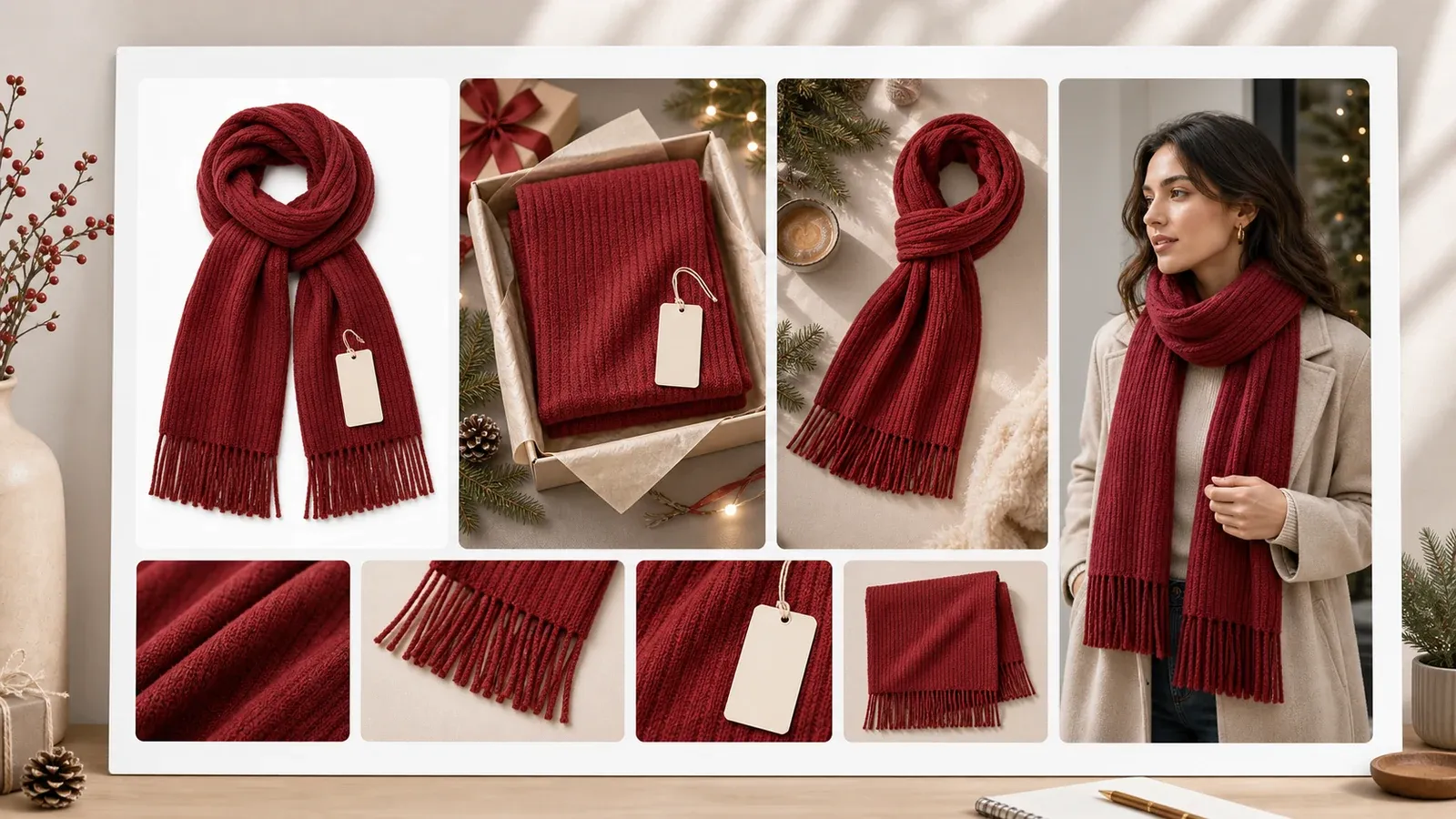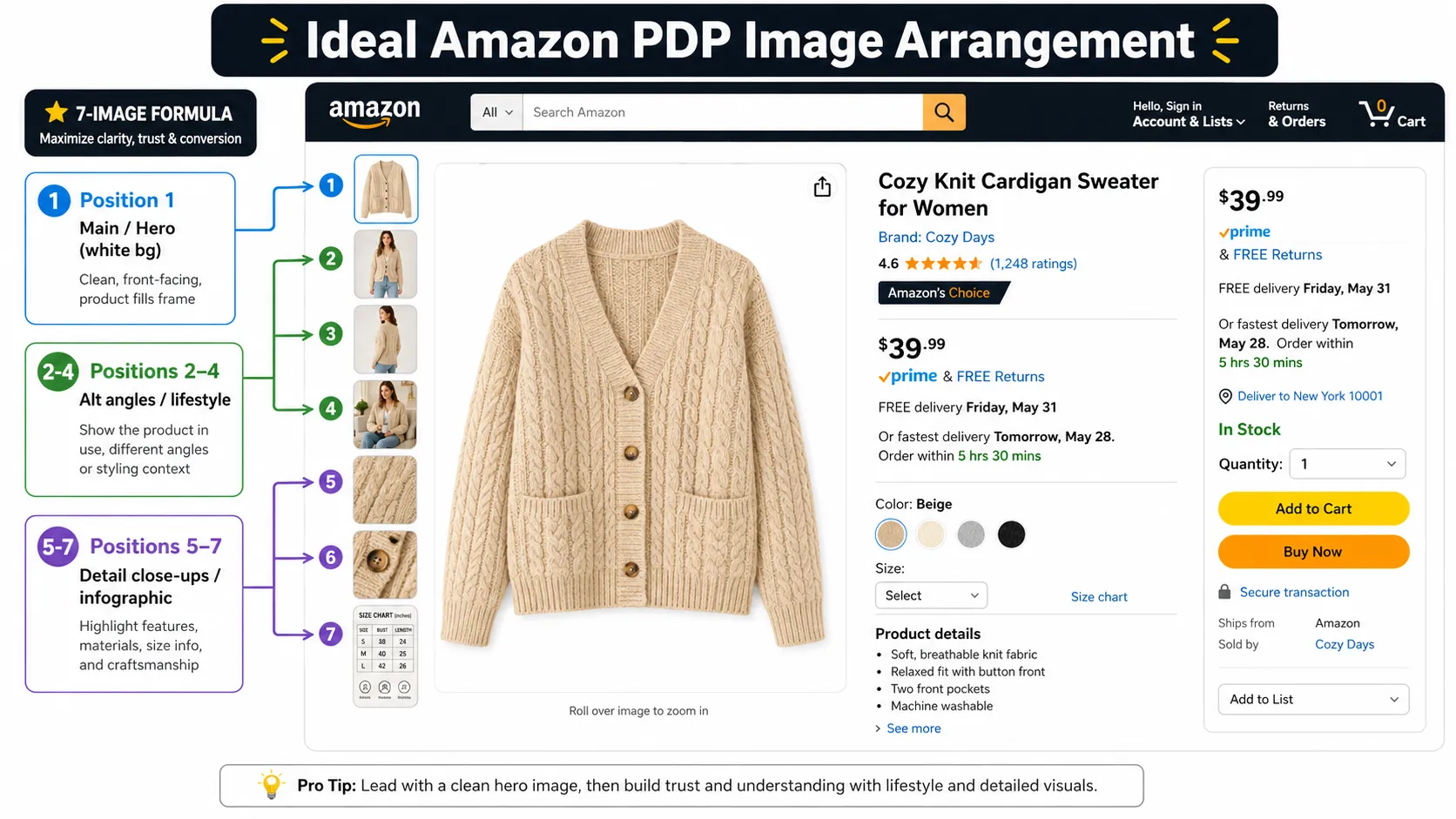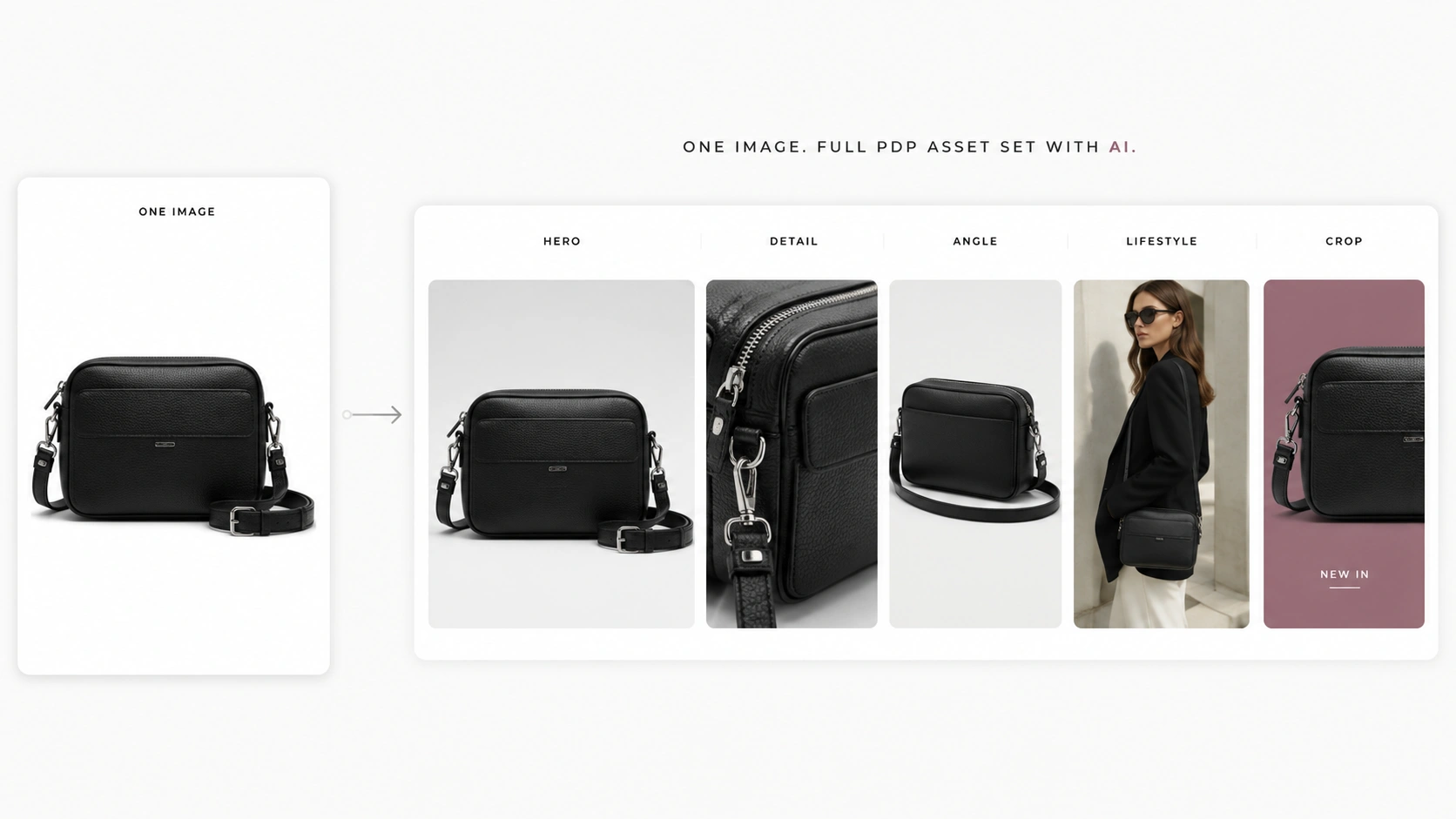




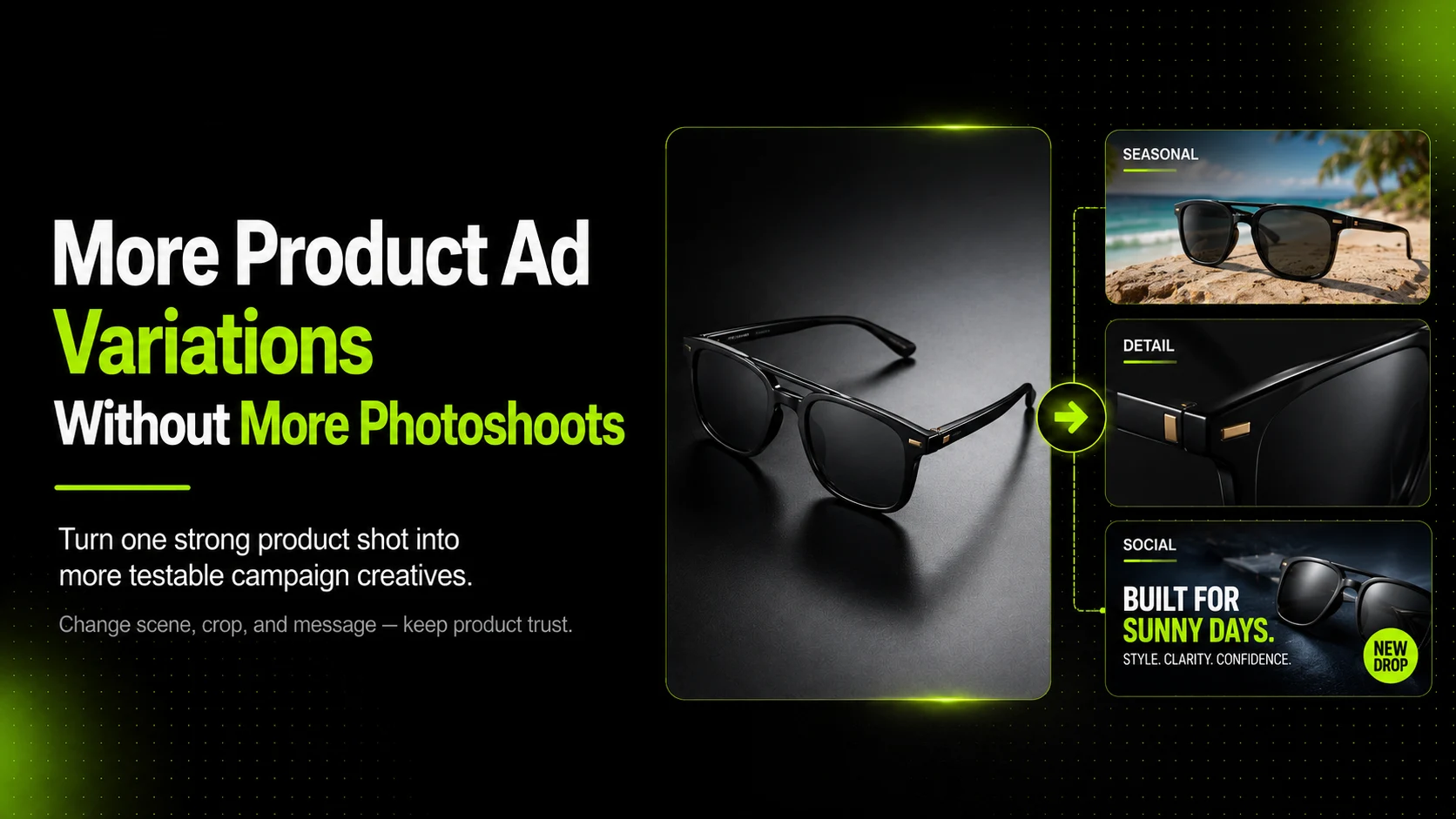
AI helps ecommerce teams generate more product ad variations by expanding one strong product image into multiple testable assets. The goal is not to create random output volume. The goal is to build more usable ad creatives without paying for another shoot, booking more talent, or redoing the whole production cycle.
That matters because ad fatigue often moves faster than visual production. A team may already have one strong product image, but paid social, retargeting, seasonal launches, and different audience tests all need fresh creative angles.
Key Takeaways
- One strong product image can often support multiple ad variants when the workflow is structured well.
- The best variations usually change scene, framing, message emphasis, or format without breaking product trust.
- AI is most useful when it expands a proven concept, not when it replaces product clarity with random styling.
- Background swaps, pose changes, and motion extensions are some of the fastest ad-variation paths.
- iCreat AI is most useful when you want to turn fewer product inputs into more testable campaign assets.
Why Ecommerce Teams Need More Ad Variations
Most teams do not struggle because they have zero product photos. They struggle because one image is rarely enough to support the number of ads they need to run.
Paid teams need different visual angles for prospecting, retargeting, promotions, platform formats, and seasonal campaigns. When each new concept requires another shoot, the testing pipeline slows down and production costs rise quickly.
Creative Fatigue and Audience Testing
Creative fatigue is one of the most practical reasons to expand ad variation faster. Even a strong hero visual loses effectiveness when the same audience sees it too many times.
Teams need more variants not only because they want visual diversity, but because paid performance depends on it.
Why One Image Is Rarely Enough for Paid Social
A single product image may work for one ad. It rarely works equally well for cold traffic, retargeting, seasonal messaging, and different placement types at the same time.
That is why variation should be treated as part of the production workflow, not as an afterthought.
What Makes a Strong Source Image for Variation Work
The quality of the variation workflow depends on the quality of the source image.
Clear Product-First References
The strongest source image is usually simple, clear, and product-first. The product should already be easy to identify, with clean edges, believable lighting, and enough detail to support reuse.
If the base image is weak, the variations usually become weak in different ways.
Why Detail Quality Matters Before Expansion
If the product has important details such as labels, texture, shape, trims, packaging text, or garment structure, those details need to be stable before you expand the creative.
Otherwise, each new variation may introduce drift instead of useful testing diversity.
If your team already has strong reference images and wants to turn them into more ad-ready visuals, AI Product Photography is the best place to start because it keeps the workflow grounded in source-image quality rather than abstract generation.
How AI Expands One Product Image Into More Ad Assets
AI is most useful when it acts as a variation multiplier.
Background Swaps for New Campaign Concepts
One of the fastest ways to create a new ad variation is to change the scene while keeping the product stable. That could mean a cleaner background, a seasonal environment, or a concept more aligned to a specific audience.
AI Image Replacer is especially useful here because many ad refreshes are really concept updates rather than full new photoshoots.
Pose and Framing Changes for Testing
For fashion products and model-led visuals, pose and framing changes can create more meaningful ad diversity without changing the product itself.
AI Pose Generator is a strong fit when the team wants more model variation, different body positions, or more product-page and ad-testing coverage from the same garment concept.
Static Image To Short-Form Video Expansion
A strong static product image can also become the base for a short-form motion asset. That matters because many ad teams need both image and video variants, but cannot afford to produce both separately every time.
AI Product Video works best here as the motion extension of a strong static concept, not as an isolated workflow.
Best Product Ad Variations To Create First
Not every variation is equally useful. Start with the changes that improve testing coverage fastest.
Prospecting vs Retargeting Versions
Prospecting ads usually need broader attention and faster recognition. Retargeting ads often benefit from more product detail, stronger proof, or closer framing.
Those are two different jobs, and they often need two different visual directions.
Seasonal and Audience-Specific Variants
Many products can support multiple campaign angles without changing the product itself. Seasonal colors, background mood, and scene context are often enough to create a fresh ad concept.
That is where AI variation is most practical because the product stays stable while the campaign framing changes.
Platform-Specific Crops and Creative Directions
A product image that works in a feed may need a different crop or composition for a carousel, short-form placement, or promotional tile. The visual should still feel connected, but it should fit the placement.
Common Mistakes To Avoid
Creating More Variations Without Stronger Source Quality
More versions of a weak product image do not improve the campaign. They just multiply the same problem.
Losing Product Accuracy During Expansion
Variation should change the ad concept, not the product truth. If the garment, packaging, or product features drift too much, the asset becomes harder to trust.
Treating Every Variation Like a Separate Production Project
The point of the workflow is reuse. If every new concept feels like starting over, the AI process is not really reducing production overhead.
A Practical AI Workflow For Ad Variation Production
- Start with one strong product reference image.
- Generate a clean static ad version first.
- Create a second variation by changing the scene, crop, or creative angle.
- Add a third variation for a different audience or campaign objective.
- Turn the strongest static concept into a short-form motion asset if needed.
This is the most practical way to think about variation. The value of AI is not just that it can generate another image. The value is that it can help a team test more creative directions from the same source visual without repeating the whole production cycle.
For a fashion brand, that may mean one garment image becomes a clean product ad, a lifestyle variation, a seasonal version, and a short motion asset. For a DTC operator, it may mean more test coverage without more studio coordination.
FAQ
Conclusion
AI can help ecommerce teams generate more product ad variations without more photoshoots, but the real value comes from workflow discipline. One strong source image can support more scenes, crops, audience versions, and motion assets when the product stays clear and trustworthy.
If you want to create more testable ad-ready visuals from fewer product inputs, start with iCreat AI's AI Product Photography. For concept refreshes and background changes, AI Image Replacer helps expand the same asset set. For motion-led creative testing, AI Product Video turns strong static visuals into short-form campaign assets.
When you are ready to scale product ad variation without another full shoot, log in to iCreat AI and start from your strongest product reference.